
Why Every Maintenance Engineer Is Searching for “Real-Time Oil Condition Monitoring” in 2026
If you’re a reliability engineer, plant manager, or wind farm operator, you’ve probably typed one of these into Google at 2 a.m.:
- “online oil condition monitoring sensor”
- “real-time oil quality sensor for predictive maintenance”
- “best water-in-oil sensor for hydraulic system”
- “wear debris sensor for gearbox”
- “lab oil analyzer portable”
You’re not alone. Searches for oil condition monitoring solutions have surged as industrial teams shift from reactive to predictive maintenance. The promise is simple: detect contamination, wear, and degradation before they cause a catastrophic failure.
But here’s the problem — most plants still rely on offline oil sampling (lab analysis every 30–90 days). By the time you get the report, the damage is already done.
This guide explains how online oil condition sensors like those engineered by Yateks are transforming industrial maintenance — and how to choose the right sensor stack for your application.
What Is Oil Condition Monitoring (OCM) and Why Does It Matter?
Oil condition monitoring is the continuous or periodic measurement of physical and chemical properties in lubricating, hydraulic, and insulating oils. The goal is to track oil health in real time so maintenance teams can:
- Detect water contamination early (free, emulsified, dissolved)
- Identify abnormal wear particles (ferrous debris indicating gear/bearing damage)
- Monitor viscosity changes (oil degradation or contamination)
- Track dielectric strength in transformer oil
- Trigger automatic alarms and integrate with SCADA / PLC / IIoT platforms
For high-value assets — wind turbine gearboxes, marine diesel engines, hydraulic presses, power transformers, mining crushers — unplanned downtime costs between 10,000 and 250,000 per hour, depending on the industry. Oil condition monitoring is the single most cost-effective way to extend asset life and avoid these losses.
The 3 Critical Parameters Every Reliability Team Must Monitor
1. Water Content in Oil — The #1 Silent Killer
Water in lubricating oil causes:
- Hydrolysis of additive packages
- Microbial growth (especially in marine and paper mill applications)
- Corrosion of bearing surfaces
- Reduced dielectric strength in transformer oil
Yateks offers two purpose-built sensors to cover the full water spectrum:
| Model | Measurement Target | Best For |
| YTS-W-1 Water Content Sensor | Free water & emulsified water | Hydraulic systems, marine lube oil, gearbox splash lubrication |
| YTS-M-1 Moisture Content Sensor | Dissolved water (ppm level) | Transformer oil, turbine lube oil, critical hydraulic systems |
Search intent match: Engineers searching “water in oil sensor” or “moisture in transformer oil sensor” need exactly this kind of dual-range coverage.
2. Ferrous Wear Debris — The Early Warning for Gear & Bearing Failure
A spike in ferrous particle concentration almost always precedes catastrophic failure of:
- Wind turbine main bearings
- Gearbox pinion gears
- Engine cylinder liners
- Rolling mill bearings
The Yateks YFM8 Wear Ferrous Sensor measures ferrous debris concentration in real time, with sensitivity down to sub-micron levels. Unlike offline spectrometric oil analysis (which requires a sample to be drawn, shipped, and lab-processed), the YFM8 delivers a continuous trend — meaning you see a wear spike the moment it starts, not 30 days later.
3. Viscosity — The Master Indicator of Oil Health
Viscosity change indicates oxidation, contamination, or additive depletion. The Yateks ViscoPen YPV Portable Multi-Parameter Fluid Tester is a handheld analyzer designed for on-site field testing of:
- Diesel fuel
- Engine oil
- Hydraulic fluid
- Gearbox lubricant
For 4-in-1 online monitoring, the YTS41 4-in-1 Oil Condition Sensor combines viscosity, temperature, water content, and dielectric constant in a single inline probe — ideal for installations where mounting space is limited.
Yateks vs. Traditional Lab-Based Oil Analysis: A Side-by-Side Comparison
| Feature | Offline Lab Analysis | Yateks Online Oil Sensor System |
| Sampling frequency | Every 30–90 days | Continuous (24/7) |
| Time to detect wear event | 30–90 days (after the fact) | Real time (within minutes) |
| Lab cost per year | 5,000–50,000+ |
One-time hardware + minimal opex |
| Data integration with SCADA / IIoT | Manual entry | Direct Modbus / PLC / cloud API |
| Suitable for remote assets (wind, offshore) | Poor (logistics burden) | Excellent (low-power, IP-rated) |
| Human error risk | High (labeling, transport) | Low (automated measurement) |
The shift is irreversible. Industries adopting Industry 4.0 / IIoT frameworks are standardizing on online oil condition monitoring as the default maintenance strategy.
Real-World Applications: Where Yateks Sensors Are Deployed
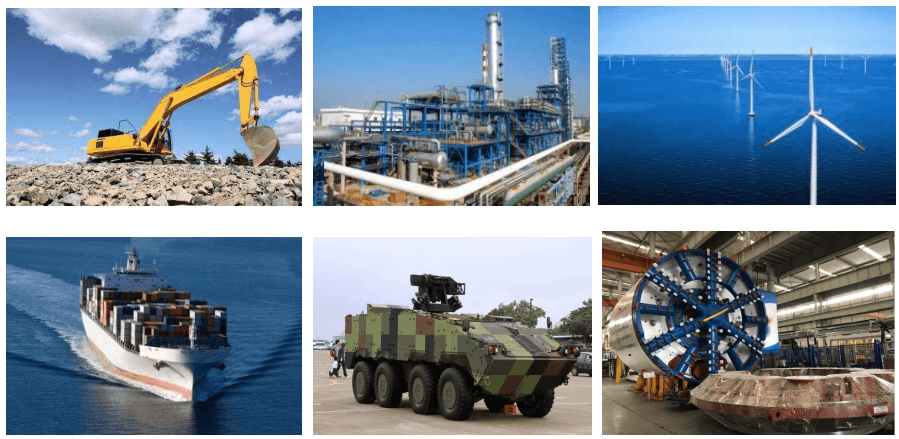
Yateks products are exported to 59+ countries and are trusted across these high-stakes sectors:
Wind Energy
Main gearbox and pitch/yaw system lubrication. Yateks sensors detect water ingress (humidity attack) and early bearing wear — the two most common causes of wind turbine downtime.
Power Generation & Transformers
Online moisture in oil monitoring for high-voltage transformers, plus DGA-related sensors. Critical for grid stability.
Marine & Shipping
Engine room condition monitoring for diesel generators, thruster hydraulics, and stern tube lubrication. The Yateks solution is IP-rated for harsh marine environments.
Heavy Industry & Mining
Crusher gearboxes, SAG mills, conveyor hydraulic systems. Predicting wear saves millions in lost production.
Aerospace & Defense
Hydraulic fluid monitoring for landing gear and flight control systems — where failure is not an option.
Rail & Transportation
Traction motor bearing lubrication, gearbox oil health, and hydraulic brake fluid monitoring.
How to Choose the Right Oil Condition Sensor: A Buyer’s Checklist
Before you buy, answer these five questions:
- What asset are you monitoring? (Gearbox, transformer, engine, hydraulic system?)
- What parameters matter most? (Water content? Wear debris? Viscosity? All of the above?)
- What’s the installation environment? (In-line, offline, hazardous area, sub-sea?)
- How will the data be consumed? (Local HMI, PLC, SCADA, or cloud dashboard?)
- What communication protocol do you need? (Modbus RTU, Modbus TCP, CAN bus, 4–20 mA, OPC UA?)
Yateks supports customized OEM/ODM solutions to meet unique integration requirements — a major advantage for OEMs building condition-monitoring systems into their own equipment.
The Yateks IIoT Cloud Platform: From Sensor to Insight in Minutes
A sensor without a platform is just a data point. Yateks provides an end-to-end IIoT cloud platform that:
- Ingests data from thousands of sensors in real time
- Applies threshold-based and AI-driven anomaly detection
- Sends push notifications, SMS, and email alerts
- Generates trend reports and failure predictions
- Supports remote firmware updates and sensor health checks
The result: a closed-loop predictive maintenance ecosystem that turns raw oil sensor data into actionable insights.
Frequently Asked Questions (SEO-Optimized FAQ)
What is the difference between online and offline oil analysis?
Online oil analysis uses sensors installed directly on the asset for continuous, real-time data. Offline oil analysis requires drawing a physical sample and sending it to a lab, which introduces delays of days to weeks. Online monitoring is essential for critical assets where early detection of water, wear, or viscosity changes prevents failure.
Can oil condition sensors detect water in oil?
Yes. Purpose-built sensors like the Yateks YTS-W-1 (free and emulsified water) and YTS-M-1 (dissolved moisture) measure water content across the full spectrum — from 0–100% saturation down to ppm-level dissolved water.
How accurate are online wear debris sensors?
Modern online ferrous wear sensors (such as the Yateks YFM8) detect particles in the sub-100 micron range with sensitivities down to a few ppm, providing early warning of abnormal wear well before vibration analysis detects a problem.
What industries benefit most from oil condition monitoring?
High-value, high-downtime-cost industries benefit most: wind power, power generation (transformers), marine, mining, oil & gas, aerospace, heavy manufacturing, and rail transportation.
How does oil condition monitoring fit into a predictive maintenance strategy?
Oil condition monitoring provides a direct, quantitative measure of asset health. Combined with vibration analysis, thermography, and motor current analysis, it forms the core of any modern condition-based maintenance (CBM) or predictive maintenance (PdM) program.
Why Yateks Is the Right Partner for Your Oil Monitoring Project
- 21+ years of R&D in oil condition monitoring (founded 2003)
- 59+ countries served
- 2,000+ team members across R&D, manufacturing, and application engineering
- Full product stack: online sensors, lab analyzers, and IIoT cloud platform
- OEM/ODM customization for unique integration requirements
- Proven reliability in wind, marine, power, mining, aerospace, and rail applications
Whether you need a single sensor for a pilot project or a turnkey multi-site deployment with cloud analytics, Yateks has the solution.
Ready to Eliminate Unplanned Downtime?
Explore the Yateks product line:
Contact Yateks for a customized quote or technical consultation: 🌐 www.yateks.com.cn