
n modern industrial predictive maintenance, an oil condition sensor is no longer an optional accessory but a core device for ensuring stable operation of mechanical equipment. Specifically, industrial lubricating oil, hydraulic oil, gear oil, and transformer oil gradually degrade over time due to thermal oxidation, moisture intrusion, solid particle contamination, and continuous high-load operation.As a result, deteriorated lubricants increase mechanical friction, accelerate component wear, and trigger unplanned machine downtime. These failures bring substantial economic losses for manufacturing and industrial facilities.Therefore, deploying a reliable industrial oil condition sensor is the most effective way to eliminate these hidden operational risks.
Most industrial teams still rely on periodic manual sampling and offline laboratory oil analysis to track lubricant health. Meanwhile, this traditional maintenance method has critical limitations: long testing cycles, delayed data feedback, and zero ability to capture sudden oil degradation or contamination in real time. Fortunately, an inline oil condition sensor perfectly solves these pain points by delivering 24/7 real-time lubricant monitoring. Furthermore, it empowers maintenance teams to adopt condition-based maintenance. This approach replaces inefficient, schedule-driven oil changes and maximizes the service life of industrial lubricants.
However, the market is flooded with diverse oil condition sensors featuring varying monitoring parameters, communication interfaces, build quality, and environmental tolerance. For procurement engineers and facility maintenance managers, selecting the right lubricant condition sensor tailored to specific industrial working conditions can be challenging. This detailed industrial buying guide covers all essential selection criteria to help you pick a high-performance, cost-effective sensor for your real-time oil condition monitoring needs.
-
Core Monitoring Parameters Match Industrial Application Needs
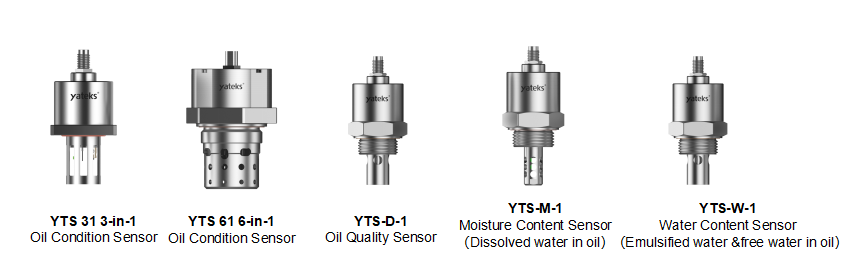
The most critical step in choosing an oil condition sensor is verifying that its monitoring parameters align with your on-site lubricant types, equipment functions, and industrial application scenarios. Different industrial machinery faces unique lubricant failure risks, making targeted parameter detection essential. A professional multi-parameter oil condition sensor integrates core detection functions to cover nearly all common industrial monitoring scenarios, far outperforming single-indicator sensors in comprehensiveness.
Dielectric constant is the core indicator for judging oil deterioration. As lubricating oil oxidizes, ages, or produces acidic substances, its dielectric constant will change significantly. The sensor can accurately capture subtle changes in oil properties through real-time dielectric constant detection, which is the main basis for judging oil replacement cycles.
Oil moisture content is a key monitoring item for hydraulic systems, wind turbine gearboxes, and marine equipment. Moisture intrusion will cause oil emulsification, reduce lubrication performance, and corrode metal components. Professional lubricant condition sensors can detect trace moisture in oil and issue early warnings to avoid equipment corrosion failure.
Real-time temperature monitoring is indispensable for high-load industrial equipment. Abnormal oil temperature is often a precursor to equipment overload, poor heat dissipation or mechanical friction failure. The integrated temperature sensing function of the oil condition sensor can synchronously record temperature data to assist in comprehensive fault judgment.
Premium industrial models also support precise oil viscosity detection, fuel dilution identification, and particulate pollution monitoring — three key indicators for high-precision equipment. For generator sets, industrial compressors, and high-speed gearbox systems, investing in a multi-parameter oil condition sensor enables full-scale oil health monitoring. It effectively prevents undetected lubricant failure and equipment damage caused by incomplete single-parameter monitoring, ensuring long-term stable machine operation.
-
Adaptability to Industrial Working Conditions
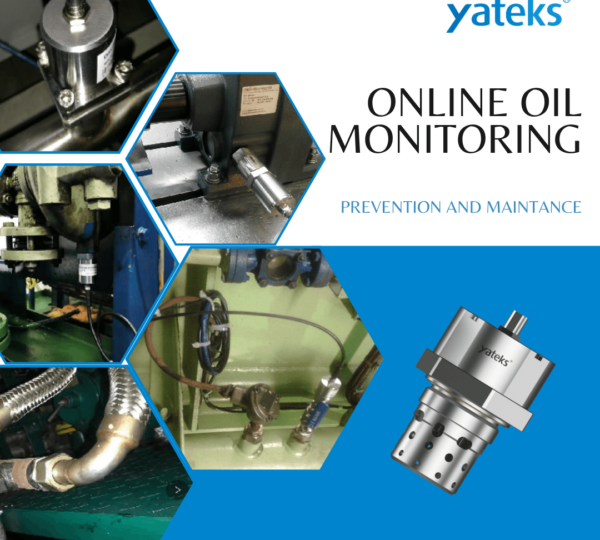
Industrial operating environments are notoriously harsh, featuring extreme temperatures, high pipeline pressure, heavy dust, mechanical vibration, and humidity. Ordinary monitoring sensors are prone to data drift and premature failure under these conditions. A qualified inline oil condition sensor must deliver superior environmental adaptability and durability to maintain long-term, accurate real-time oil condition monitoring in rigorous industrial settings.
Operating temperature range: Industrial equipment such as construction machinery, thermal power generators and wind turbines often work in extreme temperature environments. It is necessary to select a sensor with a wide working temperature range, which can maintain accurate detection from low-temperature startup to high-temperature continuous operation, avoiding data drift or sensor shutdown caused by temperature changes.
Pressure resistance performance: Hydraulic power units, high-speed gearboxes, and heavy-duty industrial systems operate under persistent high pressure. A dedicated oil condition sensor for hydraulic system applications must withstand long-term pressure impacts from oil pipelines. It should feature industrial-grade sealing structures to prevent oil leakage, sensor damage, and monitoring interruptions in high-pressure working conditions.
Environmental protection and dustproof performance: Factory workshops, construction sites and marine environments are dusty and humid. Sensors with high IP protection levels can effectively resist dust intrusion and moisture erosion, ensuring continuous and stable monitoring in harsh industrial scenarios and reducing equipment maintenance frequency.
-
Communication Interface and System Compatibility
In the era of industrial IoT and smart manufacturing, the data transmission capability of your oil condition sensor determines whether monitoring data can be seamlessly integrated with factory PLC systems, cloud IoT platforms, and remote management terminals. As a core factor affecting intelligent monitoring efficiency, communication interface compatibility is non-negotiable when selecting an industrial oil quality sensor.
Common industrial sensor communication protocols include RS485 and CAN . RS485 interface is suitable for general industrial equipment, with stable signal transmission and strong compatibility, which can be seamlessly connected with most industrial control systems, and is the first choice for factory fixed equipment such as hydraulic units and compressors.
The CAN protocol is more suitable for mobile engineering machinery, commercial vehicles and mobile power equipment. It features fast data transmission, strong anti-interference ability, and can adapt to vibration and electromagnetic interference environments of mobile equipment, realizing real-time data upload and remote early warning.
Before purchasing, always cross-check the sensor’s communication protocol with your existing equipment control system to avoid compatibility issues, failed data access, and wasted investment. Top-tier sensors for real time oil condition monitoring also support remote data calibration and cloud data viewing, enabling centralized, unmanned equipment management for industrial parks and production lines.
-
Oil Type Compatibility
Different industrial equipment relies on different types of lubricants, and sensor-oil compatibility directly impacts detection accuracy and the service life of your oil quality sensor. Common industrial lubricants include mineral oil, synthetic oil, semi-synthetic oil, industrial gear oil, hydraulic fluid, and transformer insulating oil — each with unique physical and chemical properties.
High-quality industrial oil condition sensors are professionally calibrated for various oil products, which can adapt to the property differences of different lubricants and avoid detection deviation caused by oil type mismatch. For enterprises with multiple equipment and multiple oil types, it is recommended to choose a universal multi-oil compatible sensor to reduce procurement costs and simplify equipment management.
-
Installation Mode and Subsequent Maintenance Cost
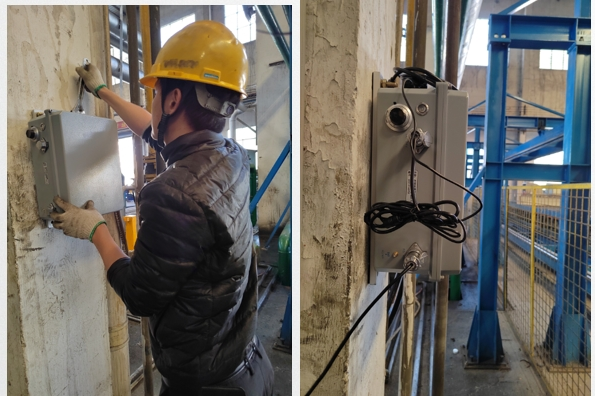
Most industrial production lines and machinery have limited installation space and allow minimal equipment modification. This makes installation simplicity a key advantage of a high-quality oil condition sensor. Modern industrial sensors adopt user-friendly inline plug-and-play design, which can be directly installed on existing oil pipelines and oil circuits without complex mechanical transformation, greatly saving installation time and labor costs.
In terms of later maintenance, excellent oil condition sensors have stable performance, no frequent calibration, and low failure rate, which can effectively reduce later operation and maintenance costs. It is necessary to avoid choosing low-cost inferior sensors that are prone to data drift and damage, resulting in increased frequent replacement and maintenance costs.
In addition, confirm whether the supplier provides professional after-sales services such as installation guidance, technical debugging and regular calibration support. Perfect after-sales guarantee is an important part of the sensor’s long-term stable operation.
-
Accuracy, Stability and Industry Certification
As precision industrial monitoring equipment, the detection accuracy and operational stability of an oil condition sensor directly influence maintenance judgments and equipment safety management. Reliable industrial sensors adopt high-precision original sensing chips and undergo strict factory calibration, featuring low detection error, strong anti-interference ability, and stable long-term data output for continuous oil condition monitoring.
Additionally, prioritize industrial oil condition sensors with authoritative industry certifications that comply with mainstream industrial standards, such as the ISO 4406 oil contamination detection specification. Standard-compliant products deliver more stable and reliable performance, fully meeting the strict monitoring requirements of formal industrial production, power equipment, and heavy machinery scenarios.
Frequently Asked Questions About Industrial Oil Condition Sensors
Q1: What industrial equipment is an oil condition sensor suitable for?
A: It is widely applicable to wind turbine gearboxes, industrial hydraulic systems, compressors, generator sets, construction machinery, marine engines, power transformers and all mechanical equipment that relies on lubricating oil for operation.
Q2: Is a multi-parameter oil condition sensor better than a single-parameter one?
A: For nearly all industrial working scenarios, multi-parameter oil condition sensors offer higher cost performance and practicality. They simultaneously monitor oil aging deterioration, moisture content, operating temperature, and other core indicators to achieve full oil health diagnosis. Single-parameter sensors only detect individual indicators and can hardly meet the comprehensive monitoring needs of complex industrial equipment.
Q3: Does the inline oil condition sensor affect equipment oil circuit operation?
A: No. Professionally engineered inline oil condition sensors feature optimized pipeline structure design, which will not affect the normal oil flow rate, pipeline pressure, or overall operation of the equipment. With safe and stable performance, they can operate synchronously with machinery for long-term continuous monitoring.
Final Thoughts
A high-quality oil condition sensor is an indispensable tool for industrial enterprises to upgrade predictive maintenance, cut operational and maintenance costs, and extend the service life of mechanical equipment. When purchasing, enterprises should not only focus on upfront prices, but comprehensively evaluate core indicators including monitoring parameters, working condition adaptability, system compatibility, lubricant matching degree, installation and maintenance costs, and detection accuracy.
Selecting a matched industrial lubricant condition sensor helps enterprises abandon traditional passive maintenance modes, realize accurate oil change reminders and early equipment fault warnings, reduce unplanned downtime, and create long-term economic benefits for industrial production and equipment operation.
If you are looking for a high-precision, stable and cost-effective industrial oil condition sensor, contact us to get professional selection solutions and customized industrial monitoring solutions.