
ntroduction:
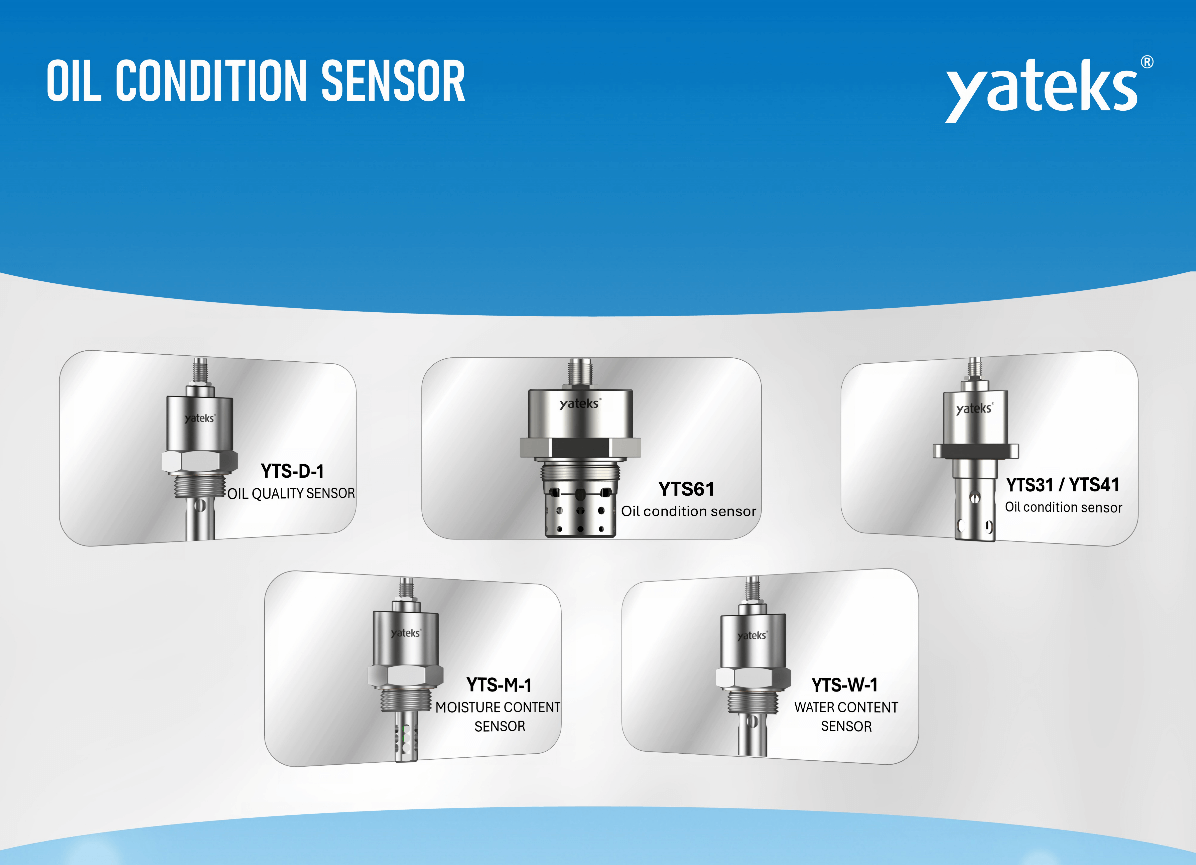
In the field of industrial equipment condition monitoring, online oil condition monitoring sensors serve as the “frontline sentinels” for predictive maintenance. Choose the right sensor, and you can detect faults early and avoid unplanned downtime. Choose the wrong one, and you may face inaccurate data, misdiagnosis, and even skyrocketing maintenance costs. Wind turbine gearboxes experiencing sensor condensation failure in low temperatures, or mining equipment missing early wear warnings due to undetected iron particles — these are real-world cases caused by improper sensor selection. As a professional online oil condition monitoring sensor manufacturer, Yateks leverages years of industry experience to systematically guide you through the selection process, helping you find the most suitable solution for your application.
1. Define Monitoring Objectives: Identify Sensor Type Based on Core Parameters
The core objective of oil monitoring determines the type of sensor required:
-
Focus on mechanical wear: Choose an oil debris sensor. For example, heavy mining equipment needs to monitor ferrous wear particles larger than 30μm, making a sensor with integrated ferrography analysis a strong candidate.
-
Control hydraulic system contamination: Prioritize an oil particle counter. Industrial-grade sensors should accurately output contamination levels according to NAS 1638 or ISO 4406 standards.
-
Track lubricant degradation: A combination of sensors is required. An oil viscosity sensor monitors fluidity in real time, while an oil acidity sensor or oil moisture sensor tracks oxidation and water contamination.
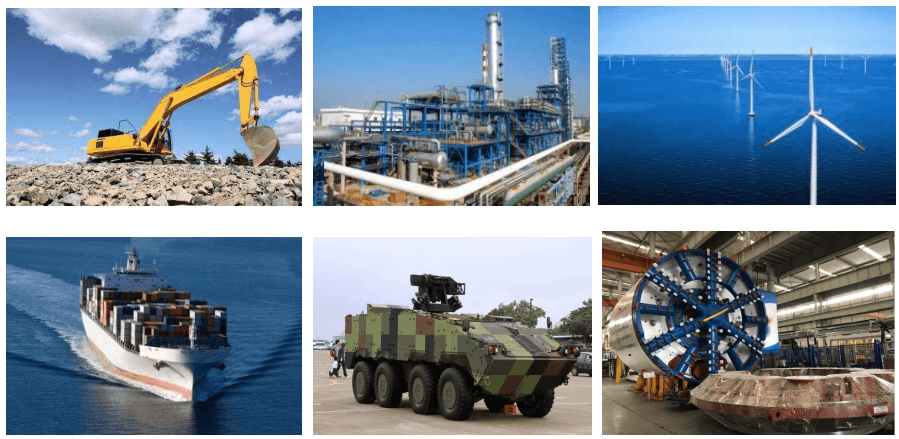
Key parameters vary significantly across industries:
-
Wind power: Equipment often operates in extremely cold, humid environments, requiring viscosity sensors rated for -40°C with anti-condensation capabilities.
-
Internal combustion engines and automotive: Sensors using laser-induced breakdown spectroscopy (LIBS) or inductive technology are recommended for precise analysis of wear particle composition.
-
Construction machinery: Hydraulic systems are complex, making multi-parameter monitoring essential. An integrated sensor combining contamination level, moisture, and viscosity simplifies installation and enables comprehensive diagnostics.
Yateks Suggestion: If your application requires simultaneous monitoring of multiple key parameters, Yateks multi-parameter integrated sensors are an ideal choice. They monitor core indicators such as contamination level, moisture, and viscosity within a compact footprint, reducing total cost of ownership by approximately 35% compared to combining individual sensors.
2. Evaluate Operating Conditions: Ensure Sensor Reliability in Harsh Environments
A precision sensor is useless if it cannot operate stably in its intended environment. Environmental adaptability directly determines sensor lifespan and data reliability.
-
Environmental tolerance is fundamental:
-
High-temperature environments (e.g., steel continuous casting machines): Verify that the sensor’s maximum operating temperature exceeds 80°C.
-
High-humidity / underwater environments: Use a capacitive moisture sensor capable of accurate measurement within the 0–5% water content range.
-
Dusty and corrosive environments (e.g., mining, chemical plants): Optical sensors are prone to contamination. Consider models with automatic cleaning functions (such as air purge systems) and verify chemical compatibility of the probe material. For phosphate ester hydraulic fluids, corrosion-resistant materials are essential.
-
-
Installation location determines monitoring effectiveness: Follow the “representative sampling” principle to ensure the sensor captures a complete picture of the oil circulation path.
-
Gearbox sensors are typically installed at the oil outlet or return line.
-
For internal combustion engines, consider multiple installation points — before and after the filter, and at the bottom of the oil pan — to monitor both incoming contamination and filtration efficiency.
-
Yateks Case Study: In a mining project, optical sensors initially experienced frequent window clogging due to coal dust accumulation. Yateks provided a customized sensor with an air purge system, extending the maintenance interval to over six months and significantly reducing on-site maintenance costs.
3. Balance Performance and Cost: Evaluate Total Cost of Ownership
When selecting a sensor, the purchase price alone should not be the deciding factor. A comprehensive evaluation of the total cost of ownership is essential, including:
-
Procurement cost: Single-parameter sensors are cost-effective for targeted monitoring, while multi-parameter integrated systems are better suited for full lifecycle management of complex equipment such as wind turbine gearboxes or large compressors.
-
Installation and retrofitting costs: Sensor interfaces, mounting brackets, and potential oil circuit modifications all add to the total cost.
-
Maintenance and calibration costs: How stable is the sensor over the long term? How often does it require calibration? Does it require professional service?
-
Downtime losses: This is often the most overlooked hidden cost. Sensor failures or false alarms can lead to unnecessary shutdowns and significant production losses.
Yateks Insight: Based on our data from a wind farm project, opting for lower-cost sensors initially to save on budget resulted in frequent failures in low-temperature conditions. The cumulative maintenance and downtime costs over the year were 1.8 times higher than if the customer had chosen Yateks high-end customized sensors from the start. Making decisions based on total cost of ownership is the true long-term strategy.
4. Practical 3-Step Selection Process: A Structured Approach to Precision Matching
To ensure a reliable selection, Yateks recommends following this three-step verification process:
-
Define requirements: Clearly list the core parameters to be monitored (e.g., NAS contamination level, moisture threshold, minimum operating temperature) and align communication protocols with existing systems (such as PLC or DCS).
-
Screen models: Based on the first two steps, filter candidate sensor models that meet both technical specifications and environmental conditions.
-
Verify certifications: For specialized industries (such as mining or petrochemicals), confirm that the sensor holds relevant third-party certifications, such as explosion-proof certifications (IECEx/ATEX) or environmental compliance.
Industry Selection Mnemonic:
-
Precision hydraulics: Choose laser-based particle counters.
-
Harsh environments: Select models with vibration resistance, wide temperature tolerance, and self-cleaning capabilities.
-
Multi-parameter needs: Opt for integrated designs to simplify system complexity.
-
Cloud connectivity: Reserve data upload interfaces to support future intelligent upgrades.
5. Looking Ahead: Intelligent Online Oil Monitoring Is the Future
With the rise of the Industrial Internet of Things (IIoT), online oil condition monitoring sensors are evolving from simple data collection tools into intelligent devices with edge computing capabilities. In the future, sensors will not only transmit data but also perform preliminary diagnostics locally, enabling more efficient decision-making for higher-level systems.
Yateks is committed to this evolution: Our product portfolio fully supports mainstream industrial bus protocols such as MODBUS and CANopen, with optional wireless transmission interfaces to ensure that your investment today can be seamlessly integrated into the smart factories of tomorrow.
Conclusion:
When it comes to selecting an online oil condition monitoring sensor, there is no “best” option — only the one that best fits your application. Just as off-road vehicles require rugged, dust-resistant sensors while passenger cars prioritize cost-effectiveness, matching the sensor to the specific scenario unlocks its full value. Yateks, as a professional manufacturer of online oil condition monitoring sensors, offers end-to-end services ranging from selection consulting and on-site installation to data diagnostics. Whether your equipment operates in steel, wind power, aviation, or marine industries, Yateks is your trusted partner.